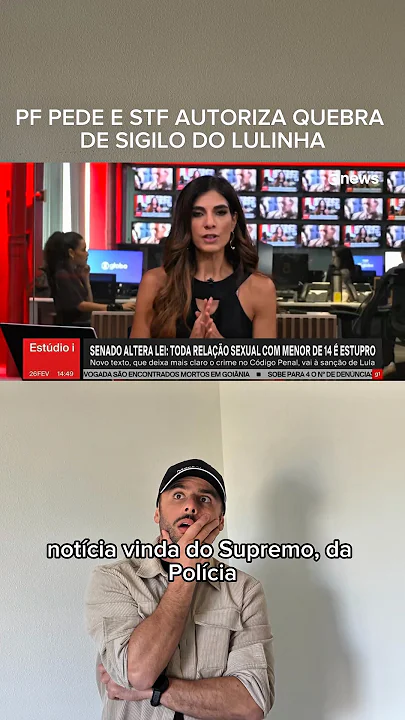
The Unveiling of Lulinha's Secrecy: A Landmark STF Decision by André Mendonça
In a move that has sent ripples through Brazil's political and legal spheres, Justice André Mendonça of the Supreme Federal Court (STF) has authorized the breaking of secrecy for Fábio Luís Lula da Silva, better known as Lulinha, son of former President Lula. This pivotal decision, central to ongoing investigations, marks a significant moment in the country's relentless pursuit of transparency and accountability. The authorization for this Lulinha STF quebra sigilo was a direct response to a request from the Federal Police, underscoring the diligent efforts of law enforcement agencies to gather crucial evidence. What makes this ruling particularly noteworthy is its timing: it predates any deliberation by the Parliamentary Mixed Committee of Inquiry (CPMI) concerning the National Social Security Institute (INSS) and has, until now, remained under judicial seal, highlighting the sensitive and often confidential nature of high-stakes investigations in Brazil.
The implications of this decision are far-reaching, touching upon the boundaries of privacy, the powers of the judiciary, and the intricate dance between political influence and the rule of law. It reinforces the STF's role as the ultimate arbiter in matters of national importance, particularly when allegations involving prominent figures surface. As Brazil continues to grapple with complex corruption cases, the authority and independence of its judicial institutions become ever more critical. This article delves into the specifics of Mendonça's ruling, explores the procedural nuances of a "quebra de sigilo," and analyzes the broader ramifications for Brazil's political landscape and justice system.
Understanding the "Quebra de Sigilo" and Its Legal Foundations
The term "quebra de sigilo," or "breaking of secrecy," refers to the judicial authorization to access confidential data that would otherwise be protected by privacy laws. In Brazil, this typically encompasses banking, fiscal (tax), and telephone records, each providing a unique investigative avenue. A "quebra de sigilo" is not a trivial matter; it represents a significant intrusion into an individual's privacy and, as such, requires robust legal justification. Brazilian law stipulates that such measures can only be authorized by a judge, at the request of an investigative body (like the Federal Police or Public Prosecution), when there is concrete evidence to suggest involvement in illicit activities and when the information sought is deemed indispensable for the investigation.
The purpose of a secrecy break is to follow the money, track communications, or uncover financial transactions that could corroborate suspicions of illegal activities such as money laundering, corruption, or tax evasion. Without such judicial tools, complex financial crimes, often meticulously concealed, would be nearly impossible to unravel. The Supreme Federal Court, as the highest court in the land, frequently hears requests for secrecy breaks involving individuals with special legal prerogatives or those involved in investigations of national scope. The STF's oversight ensures that these powerful investigative tools are used responsibly and constitutionally, safeguarding individual rights while empowering law enforcement to combat serious crime effectively.
- Banking Secrecy: Reveals financial transactions, account balances, and asset movements.
- Fiscal Secrecy: Uncovers tax declarations, income sources, and property ownership.
- Telephone Secrecy: Provides call records, SMS data, and sometimes location information, though content interception requires a separate warrant.
Justice Mendonça's decision to authorize the quebra de sigilo de Lulinha signifies that the STF found sufficient grounds and compelling necessity for these measures, indicating a substantial basis for the Federal Police's request.
André Mendonça's Pivotal Role and the Federal Police's Initiative
The authorization granted by Justice André Mendonça is a testament to the STF's commitment to upholding the rule of law, even when faced with attempts to impede justice. Mendonça, known for his rigorous approach to legal analysis, acted upon a direct request from the Federal Police, highlighting that the impetus for this significant step came from law enforcement itself, rather than from a political committee or public outcry. This detail is crucial, as it underscores the procedural integrity of the investigation, rooting it in judicial and police protocols.
Furthermore, the context reveals an attempt by Senate President Rodrigo Pacheco and Senator Davi Alcolumbre to potentially shield Lulinha from scrutiny. However, Mendonça's preemptive decision effectively bypassed any such efforts, demonstrating judicial independence and a refusal to allow political maneuvers to obstruct legitimate investigations. As reported, Mendonça's authorization *predates* any deliberations by the CPMI do INSS. This timing is critical; it means the judicial process was already in motion, independently of parliamentary inquiries that might have sought to exert influence or offer protection. This assertiveness by the STF, particularly by Justice Mendonça, in securing the Lulinha's Secrecy Breached: Mendonça Overrules Shielding Efforts, reinforces the notion that no one is above the law, regardless of their family connections or political standing.
The Federal Police's role as the requesting body is also vital. It signifies that the investigation into Lulinha and his financial dealings had reached a point where access to confidential records was deemed absolutely necessary to advance the case. Police investigations are often the bedrock upon which subsequent legal proceedings are built, and an STF-approved secrecy break provides a powerful tool for gathering irrefutable evidence. This decision, therefore, represents a significant victory for investigative journalism and the broader anti-corruption movement in Brazil.
The Significance of Lulinha's Secrecy Break in Brazil's Political Landscape
Fábio Luís Lula da Silva, or Lulinha, is a figure who has frequently been at the center of public and political debate due to his familial connection to former President Luiz Inácio Lula da Silva. While not directly involved in politics himself, Lulinha's business ventures and financial dealings have often drawn scrutiny, particularly in the context of broader investigations into alleged corruption networks involving state-owned companies and political figures. The authorization of the Lulinha STF quebra sigilo is thus highly significant, as it indicates a serious progression in inquiries that could potentially link to or shed light on larger cases impacting Brazil's political elite.
This development underscores the delicate balance between individual privacy and the public interest in prosecuting serious crimes. For many Brazilians, the breaking of secrecy for a figure like Lulinha symbolizes a step towards greater transparency and accountability, reinforcing the principle that justice should be applied equally to all, irrespective of their connections. In a country that has endured numerous corruption scandals, such decisions by the STF are often viewed as crucial checks and balances against potential abuses of power and influence. It sends a clear message that judicial institutions remain vigilant and independent, prepared to delve into sensitive areas to uncover the truth.
The decision can also have ripple effects on public perception and trust in political institutions. When the STF acts decisively in cases involving prominent families, it can bolster public confidence in the justice system. Conversely, any perceived leniency or obstruction can erode that trust. This makes Mendonça's firm stance particularly impactful in a climate where judicial integrity is constantly under public scrutiny. The ability of the STF to authorize such measures, even under conditions of secrecy, demonstrates its profound capacity to shape the course of national investigations and influence the political narrative.
What Lies Ahead: Potential Ramifications and Legal Precedents
The authorization for Lulinha's secrecy break is not an endpoint but rather a crucial step in an ongoing investigation. Once the banking, fiscal, and potentially telephone records are accessed and analyzed by the Federal Police, the findings will be meticulously examined for any evidence of illicit activities. This could lead to a range of outcomes, from the filing of formal charges to the dismissal of the case if no wrongdoing is found. The information gleaned from these records could also provide critical leads, expand the scope of the current investigation, or even trigger new inquiries into related individuals or entities.
The legal precedent set by Justice Mendonça's decision is also noteworthy. It reaffirms the STF's power to intervene decisively in high-profile cases, particularly when attempts to create political shields or obstructions are suspected. This firm stance can serve as a deterrent against future attempts to interfere with judicial processes, strengthening the independence of Brazil's judiciary. It also highlights the importance of the Federal Police's investigative work and its capacity to bring complex cases to the attention of the highest court.
For those following Brazil's political and legal developments, understanding the intricacies of these decisions is paramount. Here are some key points to consider:
- Judicial Independence: The STF's ability to act independently of political pressures is crucial for a healthy democracy.
- Investigative Progress: Secrecy breaks are often pivotal in providing concrete evidence needed for indictments and convictions.
- Public Scrutiny: While decisions may initially be under seal, public interest ensures they eventually come to light, demanding transparency.
- Constitutional Safeguards: The process of obtaining a "quebra de sigilo" is constitutionally protected, ensuring due process.
The coming months will likely see the Federal Police working diligently to process the newly acquired information. The outcomes of this investigation could have significant implications, not only for Lulinha himself but also for the broader political landscape, potentially revealing connections and activities that have long remained concealed. This case will undoubtedly be watched closely by legal experts, political analysts, and the Brazilian public alike, as it continues to unfold.
In conclusion, Justice André Mendonça's authorization of the Lulinha STF quebra sigilo represents a significant moment in Brazil's ongoing efforts to combat corruption and ensure transparency among its most influential figures. This decision, driven by a Federal Police request and made independently of political maneuvers, underscores the critical role of the Supreme Federal Court in upholding the rule of law. As the investigation progresses, the insights gleaned from Lulinha's financial and communication records will undoubtedly contribute to a more complete understanding of complex cases, reinforcing the principle that accountability must extend to all, without exception.